
Description
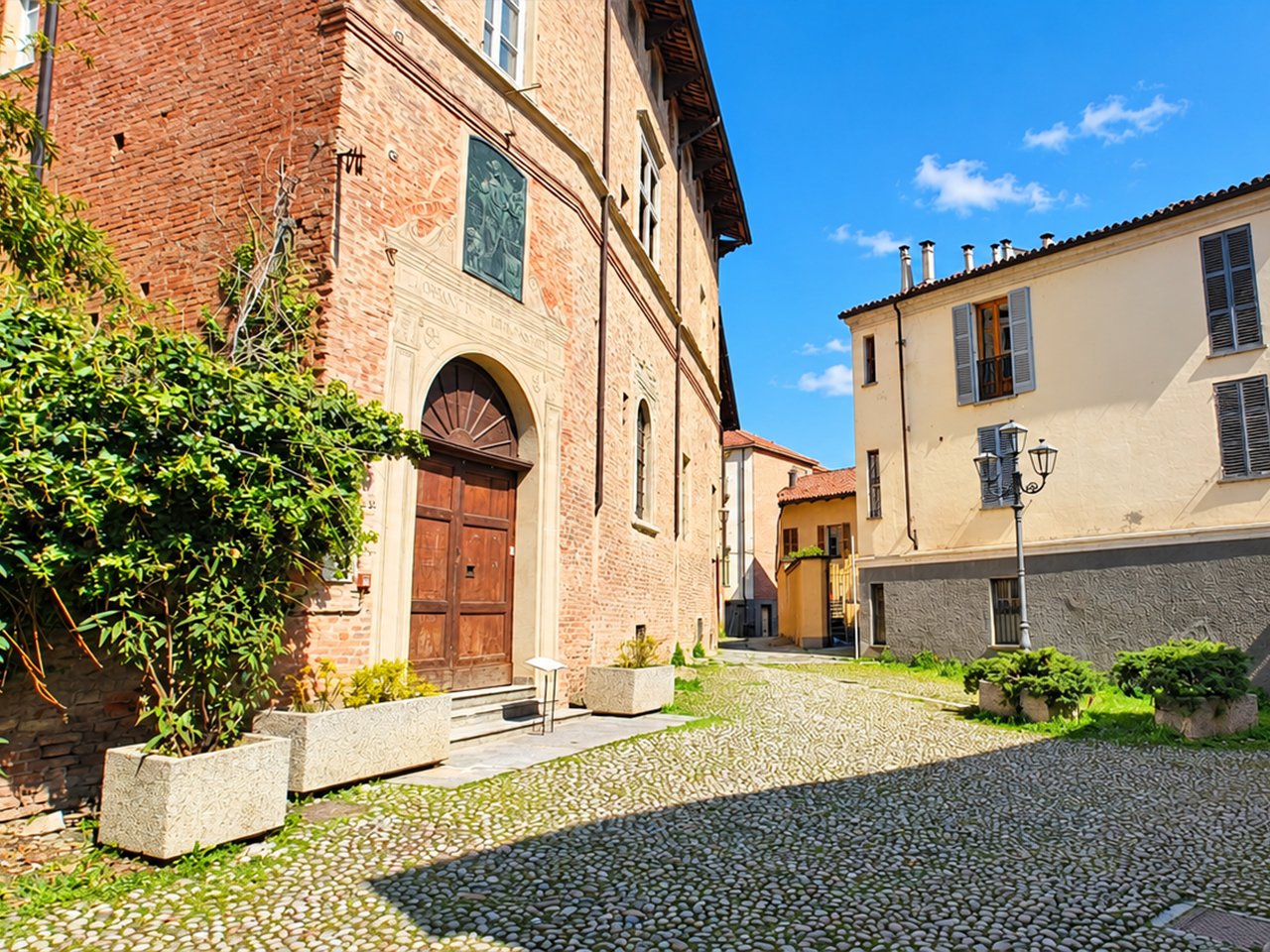
A short walk from the Cathedral stands Palazzo Mazzola, one of the few surviving examples of Renaissance architecture in Asti.
The building was acquired in the early sixteenth century by the jurist Francesco Mazzola. Its façade still features a fine cross-mullioned window bearing the name and coat of arms of its first owner.
Inside, the grand hall, with its elegant barrel vaults and a monumental staircase, is particularly noteworthy. It retains a decorated wooden ceiling dating from 1516 and frescoed bands added during the seventeenth century.
In 1710, the palace was donated to the Opera Pia Buon Pastore, a charitable institution. Since 1979, it has housed the Municipal Historical Archives.
Today, Palazzo Mazzola preserves a remarkable documentary heritage that traces the history of Asti as far back as 947. Among its most valuable documents is the Codex Astensis, a richly illuminated manuscript containing records dating from 1065 to 1353.
Another outstanding item is the Codice Catenato, the chained volume of the city’s statutes, compiled between 1387 and 1476. Equally important for the study of Asti’s history are the municipal council records, which have documented every aspect of public life since 1385. The archives also include an extensive photographic collection.
Palazzo Mazzola is also home to the Museum of the Palio. At the heart of the museum is the Palio horse race, a tradition whose roots lie here in Asti.
Spanning eight centuries of history, this collective ritual reflects both the city’s moments of glory and the changes it has undergone over time. Enriched by temporary exhibitions, the museum experience presents the Palio as an emotional journey through sporting competition, passionate local allegiance and the city’s deep and enduring bond with its patron saint.