
Description
Along Corso Alfieri, two historic residences illustrate the evolution of Asti’s architectural prestige, from medieval austerity to Renaissance elegance.
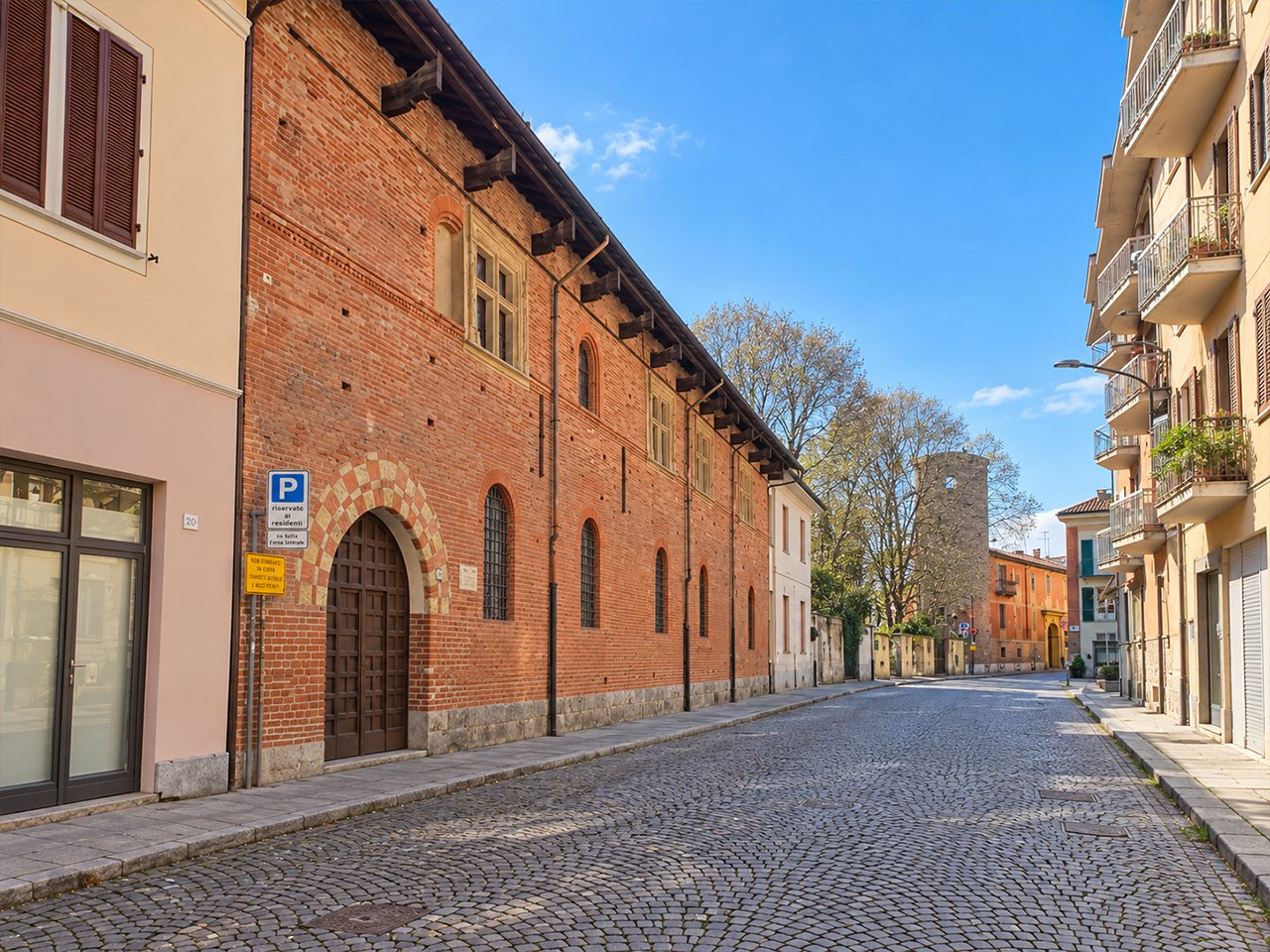
Palazzo Verasis-Asinari is a harmonious combination of different historical periods. Dating from the thirteenth and fourteenth centuries, the palace was remodelled in the early sixteenth century, while retaining much of its medieval character, including the imposing two-tone Gothic arch framing the entrance.
Its Renaissance features include three rare and exceptionally well-preserved stucco-framed cross windows, as well as an internal portico with stone columns and capitals, one of which bears a coat of arms.
The building is a significant example of the architectural culture of the so-called Orléans period, when Asti was under French rule.
Originally owned by the Asinari family of Costigliole, it passed to the Verasis-Asinari family in the early seventeenth century, following the extinction of that branch.
Since 1935, the palace has housed the Giuseppe Verdi Municipal Institute of Music. It was acquired by the Municipality and carefully restored.
A short distance away, Palazzo Falletti bears witness to the transformation of a fourteenth-century fortified residence.
Once the home of the powerful Falletti family, who were involved in moneylending in partnership with the Troya family, the building lost its military appearance following Renaissance alterations commissioned by the Incisa di Santo Stefano family.
Its finest feature is the historic entrance portal. The jambs are decorated with elegant candelabra motifs, while the inner surface of the arch is adorned with rosettes that soften and enrich the structure.
With its courtyards and echoes of medieval financial activity, the palace embodies the transition from an austere fortified residence to a prestigious aristocratic home.