
Description
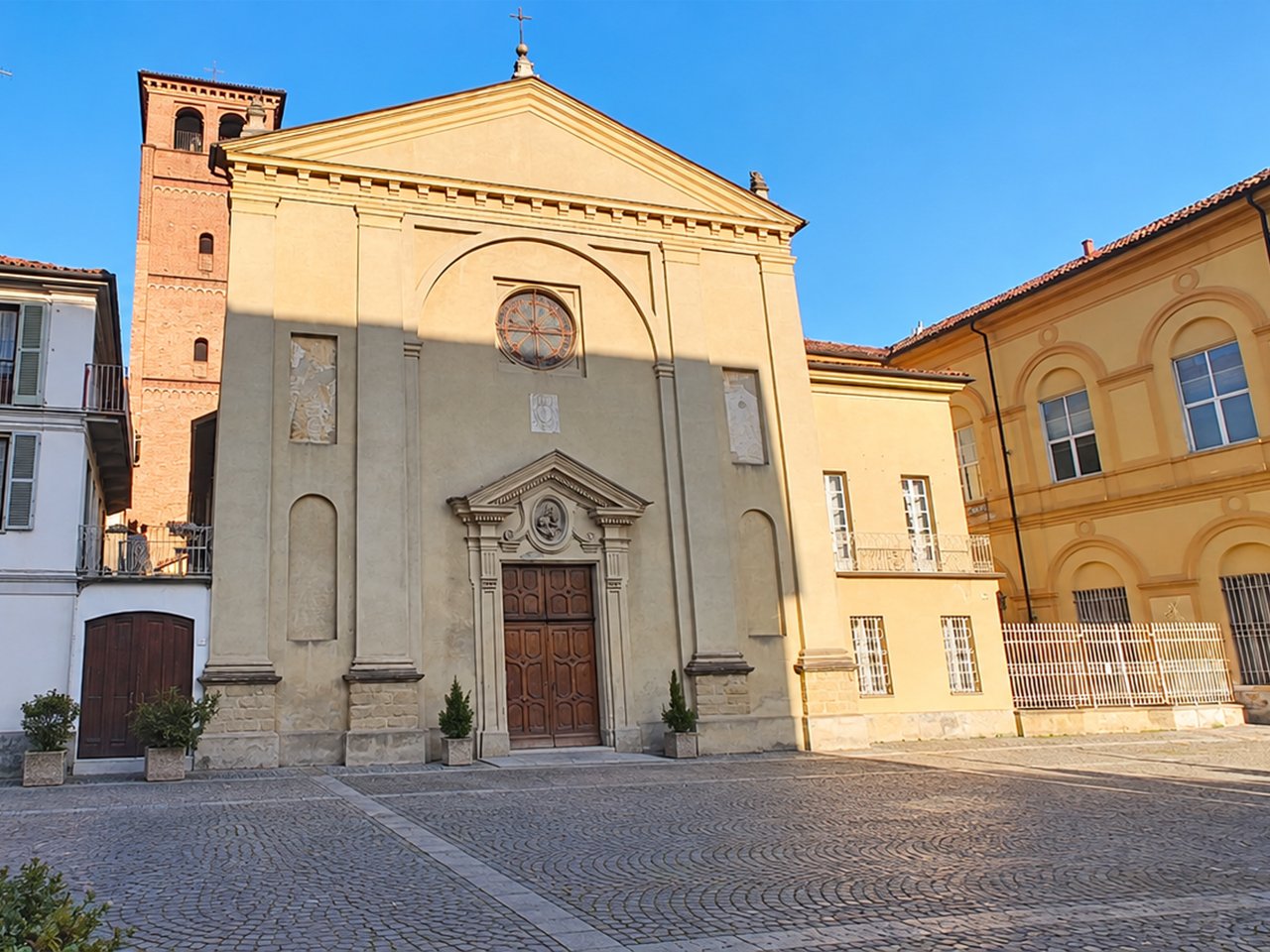
Overlooking Corso Vittorio Alfieri, in the square that bears its name, the Church of Santa Maria Nuova offers a fascinating insight into the history of Asti.
Its origins date back to the eleventh century. The church was given the name “Nuova”, meaning “New”, to distinguish it from the Cathedral of the Assumption and the Church of Santa Maria fuori le mura, or Saint Mary Outside the Walls. It was first mentioned in 1009, in a document recording an exchange of land.
Although its present appearance is the result of centuries of alterations, the base of the bell tower still retains its austere Romanesque character.
The simple façade conceals an interior distinguished by magnificent green pointed-rib vaults. The church has a single nave, a polygonal apse and six side chapels.
Alterations carried out during the eighteenth century included changes to the large rectangular windows, while further work in the nineteenth century helped give the building its present appearance. These renovations nevertheless preserved the fine sixteenth-century wooden furnishings and the altarpiece by Gandolfino da Roreto. Located at the far end of the apse, the painting depicts the Madonna Enthroned with Saints and the Risen Christ.
The square is dominated by the marble monument to Count Federico Cotti di Ceres, who lived from 1819 to 1849. The statue was created in 1855 by Giuseppe Dini, the sculptor also responsible for Asti’s monument to Vittorio Alfieri. Originally placed beneath the portico of the hospital, it was moved to its present location in 1931.
The monument commemorates a distinguished philanthropist from Asti, the last descendant of one of the city’s prominent families and a generous benefactor of the civic hospital.
Count Cotti di Ceres was actively involved in many of Asti’s charitable institutions, including the Monte di Pietà and the Ospizio di Carità. He also transferred to the Municipality, for the sum of one hundred thousand lire, the extensive former Convent of Sant’Anastasio, which he had purchased following its suppression during the Napoleonic period.
The complex occupied the entire block that now houses the Alfieri classical secondary school, the Sella Institute, the Goltieri School and the Faletti Library.