
Description
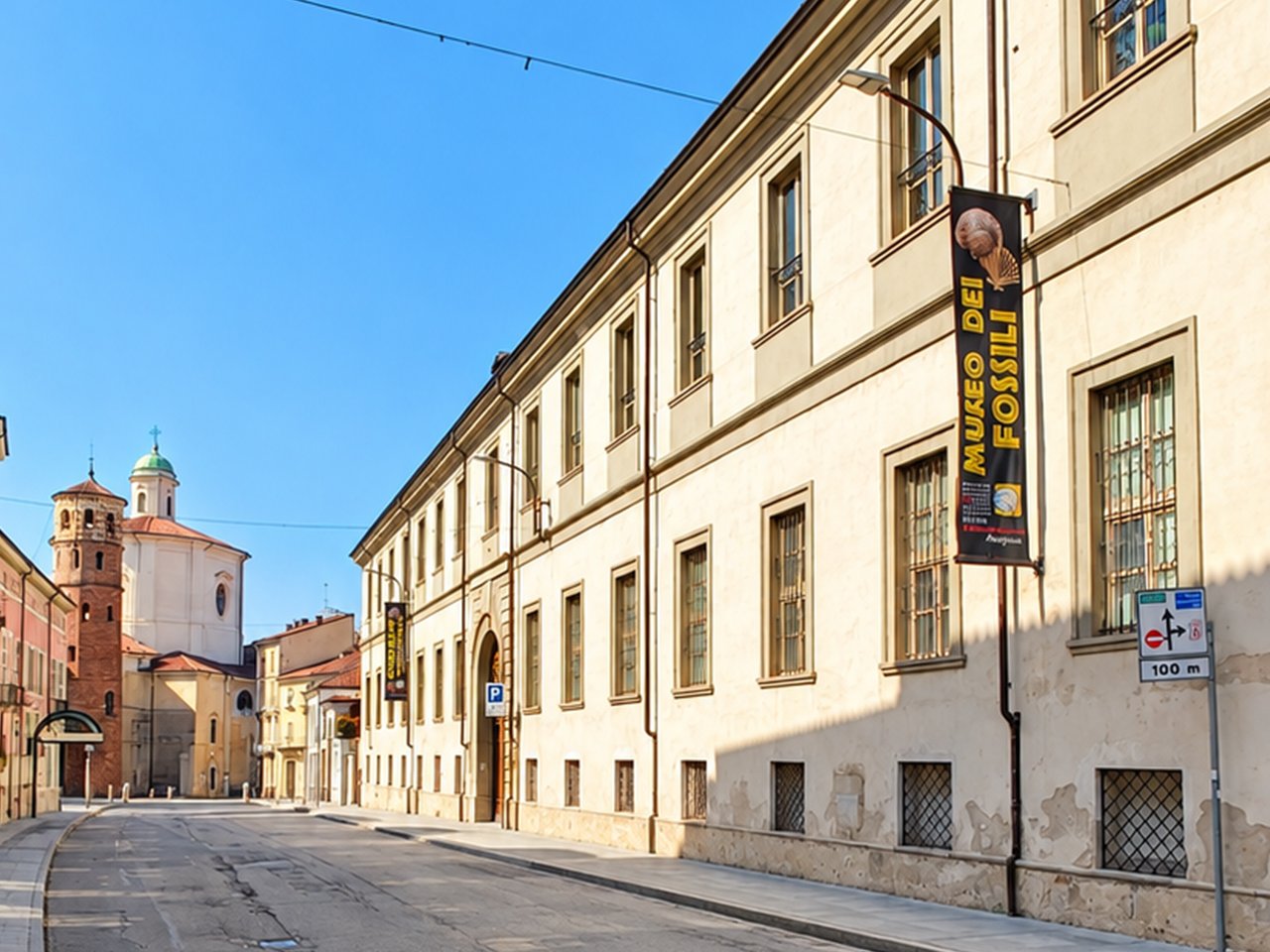
The Michelerio Complex, which has also housed the Asti Palaeontological Museum since 2011, brings together the architectural history of Asti and the geological history of the surrounding area.
The monastery was founded in 1524 by the wife and daughters of Benentino Guttuari. Construction began in the mid-sixteenth century and was completed in 1561. Between 1767 and 1769, the complex was enlarged without altering the Renaissance character of the cloister and the loggia above it.
The convent church has a two-tiered terracotta façade crowned by a triangular pediment. The front section of its vault preserves the fresco The Glory of Paradise, painted by Gian Carlo Aliberti.
Following the Napoleonic suppression of religious institutions in 1802, the complex was used for a variety of public purposes. It first became a hospital and refuge, and was later used as a barracks and a charitable home.
In 1873, it was purchased by the Opera Pia Michelerio, a charitable institution that provided accommodation and education for orphaned boys until 1971.
The museum exhibition explores the most important geological and palaeontological events of the past 25 million years, from the Miocene to the Pliocene epochs.
Among its most remarkable exhibits — some of them unique in the world — are the fossilised skeletons of cetaceans discovered in the Asti area. These include both mysticetes, or baleen whales, and odontocetes, the group that includes dolphins and other toothed cetaceans.
The fossils date from the Pliocene epoch, when the sea extended across what is now the Po Valley. The museum preserves one of Italy’s most important collections of fossil cetaceans, discovered in Piedmont over recent decades.
The complete collection comprises more than 14,000 state-owned specimens originating from the Asti area.
The visit concludes at a fascinating aquarium that recreates the subtropical marine ecosystem of the ancient Po Valley during the Miocene, around 25 million years ago.