
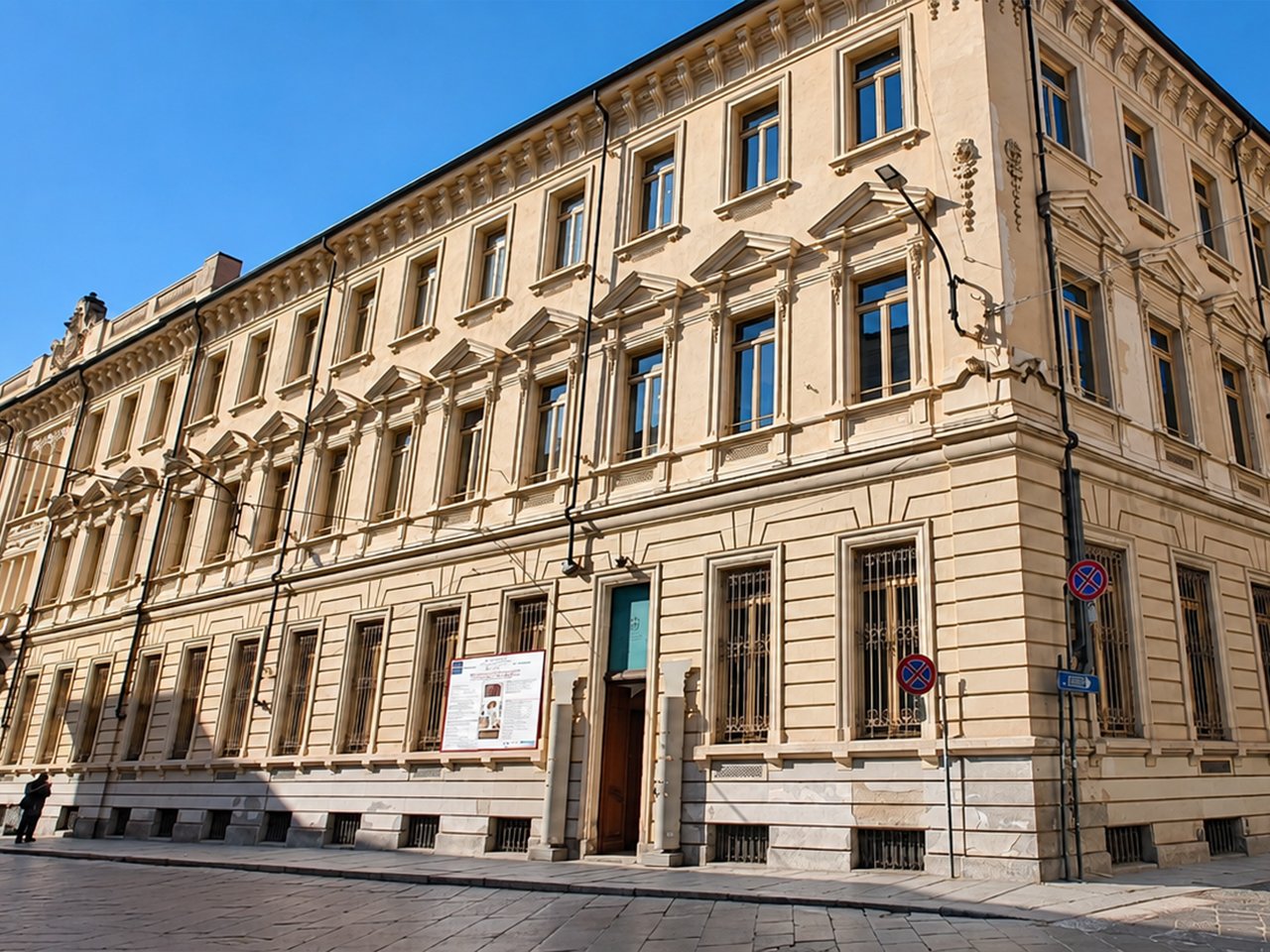
Description
The Sant’Anastasio complex is one of the most important sites for exploring Asti's earliest history. Here, archaeology and museum displays come together, allowing visitors to walk through centuries of richly layered historical evidence.
Throughout the site, traces of Roman paving can be seen alongside evidence of dwellings dating from Late Antiquity. The transition to the following centuries is marked by tombs dating to the seventh to tenth centuries, as well as the foundation wall of the early medieval Church of Sant’Anastasio’s façade.
Dating from the eighth century, this church formed the original heart of the Benedictine convent for women, first documented in 1008.
At the centre of the site lies the crypt. Its eleventh-century core contains columns and capitals reused from Roman and early medieval buildings, while the twelfth-century extensions feature finely carved sandstone capitals.
Together with the remains of the first Romanesque church, dating from the eleventh century, and the larger basilica built during the twelfth century, these structures reveal the complex’s continuous evolution. The archaeological remains also include traces of the seventeenth-century church, which was demolished in 1907.
Following its recent renovation, the museum now covers an area of 350 square metres. Its new gallery and six exhibition rooms house the Archaeological Museum and the prestigious Egyptian collection, previously displayed at the San Pietro complex.
The exhibition brings together local archaeological finds, objects from the museum stores of the Royal Museums of Turin and the Diocesan Museum, and architectural stonework dating from the eighth to the sixteenth centuries.
Among the exhibits are capitals from the second Romanesque Church of Sant’Anastasio, sculptures from the Gothic Church of Santa Maria Maddalena, which belongs to the Dominican Fathers, and cornerstones and coats of arms from the city’s fortified residences and aristocratic palaces.
Together, they offer a remarkable synthesis of religious heritage, archaeological discovery and the treasures of the local area.