
Description
Along the historic route of Corso Alfieri, Asti’s aristocratic heart reveals two residences that illustrate the city’s transition from the splendour of the nobility to the rise of the nineteenth-century bourgeoisie.
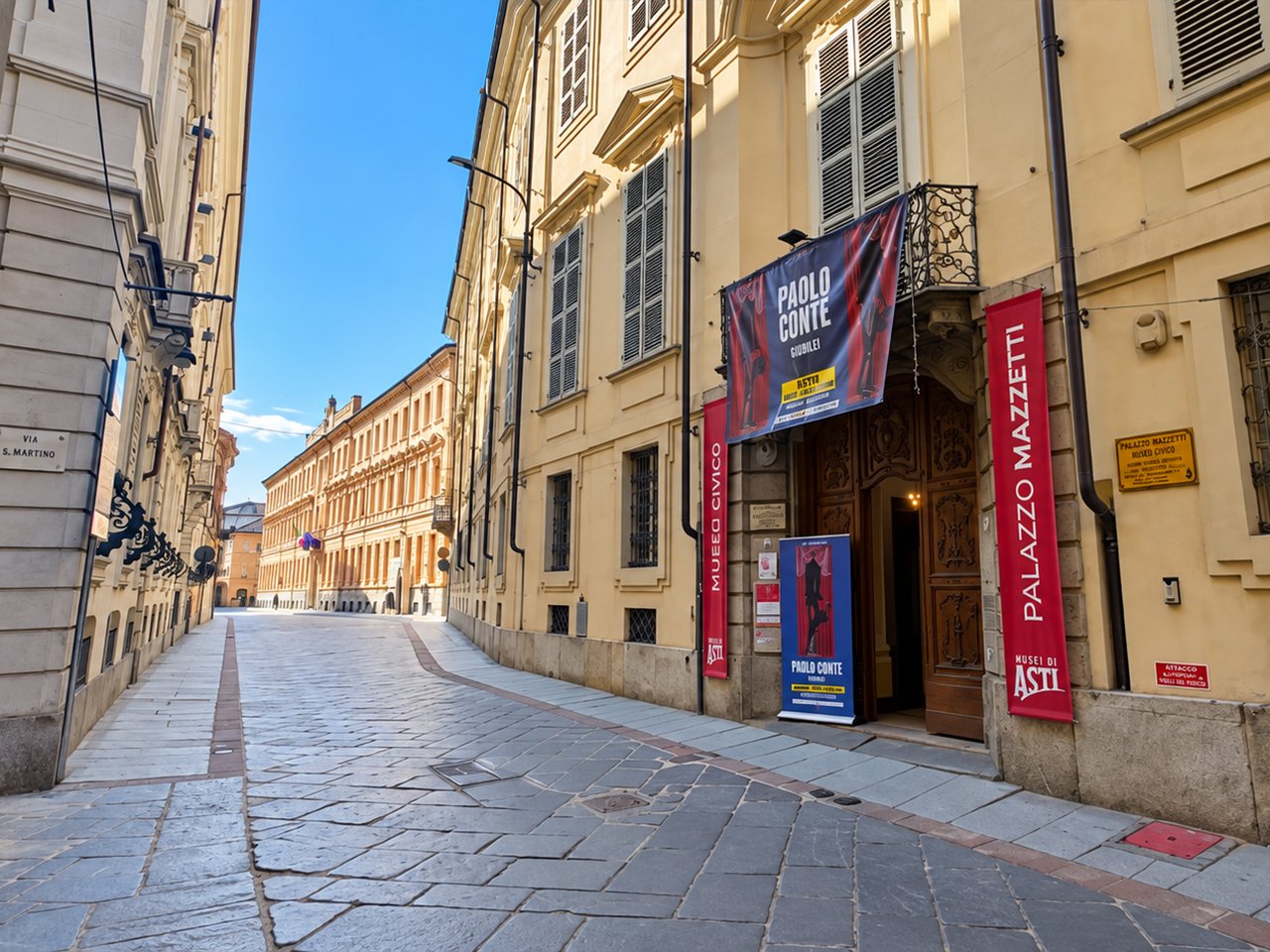
Palazzo Mazzetti is a masterpiece of Piedmontese Baroque architecture. Built over a group of medieval fortified houses, it owes its prestige to the Mazzetti family, whose fortunes were closely connected with the activities of the city’s Mint.
The palace took shape in two main phases. After 1716, several existing buildings were combined into a single residence. From 1751 onwards, the architect Benedetto Alfieri designed the eastern wing, the grand staircase and the ballroom.
Over the centuries, this distinguished residence welcomed illustrious guests such as James Stuart, Charles Emmanuel III of Savoy, and Napoleon I. Today, it belongs to the Fondazione Cassa di Risparmio di Asti and houses the Civic Museum.
In the rooms of the piano nobile, surrounded by exquisite stucco decoration, visitors can admire the miniature sculptures of Giuseppe Maria Bonzanigo, historic textiles and a remarkable collection of ivory objects, lacquerware and East Asian porcelain. The collection was assembled during the travels of Enrico Secondo Guglielminetti and Giuseppe Rolando.
A short walk away stands Palazzo Ottolenghi. The building acquired its present appearance after 1754, at the request of Count Carlo Gabuti di Bestagno, and was purchased by the Ottolenghi family in 1851.
As prominent members of Asti’s Jewish community, the Ottolenghi regarded the purchase as both a political and a social statement following the introduction of the Albertine Statute. By acquiring a prestigious residence on the Via Maestra, the city’s principal thoroughfare, they were publicly affirming their new status and influence.
Zaccaria Ottolenghi transformed the piano nobile into a sumptuous residence in the Second Empire style. Its interiors were enriched with overdoor paintings by Francesco Gonin and other important works of art.
The palace was later sold to the Municipality. It initially served as the temporary seat of the Prefecture and subsequently housed several municipal departments.
Following extensive restoration work carried out between 2011 and 2016, Palazzo Ottolenghi now houses the Museum of the Risorgimento and an evocative underground air-raid shelter. Together, they bear witness to both Asti’s contribution to the unification of Italy and more recent chapters in the city’s history.